This collection consists of maritime statistics and analysis reports from the maritime sector. Many are commercially published, available only to researches on campus or authorized via the library proxy server.
All reports are made available for fair use, academic purposes only. Research for commercial purposes is strictly prohibited
Drewry Shipping Insight (series)
UNCTAD Review of Maritime Transport (series)
-
Impact of including maritime transport in the EU ETS
World Maritime University, University of Gothenburg, Julia Hansson, Lars Zetterberg, Johan Rootzén, Rasmus Parsmo, Erik Fridell, Jonas Flodén, Johan Woxenius, Zeeshan Raza, Anastasia Christodoulou, Dimitrios Dalaklis, and Aykut I. Ölcer
-
Mental health interventions for international seafarers during the COVID-19 Pandemic : a pilot study
Sanley Abila, Lijun Tang, Momoko Kitada, Serafin Malecosio, and Rhea Subong
The COVID-19 pandemic has highlighted the key role that seafarers play in the global supply chain. As the pandemic took hold in early 2020 a significant crew change crisis unfolded globally due to border closures, strict quarantine requirements and a faltering vaccination rollout. In normal times the mental health of seafarers has been recognised as crucial to their wellbeing and safety at sea. Stranded aboard their vessels and with an unclear pathway out of the pandemic the mental health of seafarers deteriorated significantly driving some to suicide.
With 400,000 seafarers stranded at sea at one point, the issue was framed as an ongoing humanitarian crisis. Stakeholders within the maritime industry including companies and non-governmental organisations (NGOs) responded by providing mental health and psychosocial support typical of crisis intervention aiming ‘to protect or promote psychosocial wellbeing and/or prevent or treat mental disorder’ as defined by the IASC Guidelines on Mental Health and Psychosocial Support in Emergency Settings. However, it is unknown which of these measures are available to seafarers, and perhaps more importantly, which interventions they believe are most beneficial to their mental health and wellbeing. These are the questions our study explored. In this report, we present our findings and analyse the psychosocial or mental health interventions that seafarers have experienced, as well as how these measures are perceived in the context of the ongoing pandemic. We can evaluate individual intervention measures and provide policy recommendations based on this data.
-

Social security rights of the European resident seafarers : a joint report of the European Transport Workers’ Federation and World Maritime University
World Maritime University and European Transport Workers' Federation
This report presents a mapping exercise undertaken to assess whether national laws and regulations in 10 European Union (EU) countries (Belgium, Croatia, Cyprus, Denmark, France, Italy, Malta, the Netherlands, Poland, and Romania), one European Economic Area (EEA) country (Norway) and the United Kingdom (UK), provide for coverage to seafarers residing in EU/EEA Member States, Switzerland (CH) or the UK. A qualitative methodology combining desktop research and empirical legal analysis was used to gather data as to the particularities of their legal framework and how it works in practice. The focus is on the cross-border nature of the profession and whether the regulatory framework provides for effective communication, cooperation and coordination among the relevant countries for the employment relationship and its social security aspects as well as its operation in practice.
-

Empowering women for the United Nations Decade of Ocean Science for Sustainable Development
World Maritime University
-
Manning annual review and forecast 2021/2022
Drewry
Manning Annual Review & Forecast Annual 2021/22 provides one of the most complete annual assessments of vessel manning costs available in a single source. Seafarer cost assessments, trends and employment terms are provided for 38 representative ship types, spanning the chemical, container, dry bulk, general cargo, LPG, LNG, offshore, oil tankers, reefers and RoRo sectors. The report also examines current and projected supply and demand for seafarers and the likely impact on skills requirements and wage costs.
- Benchmark crew wages and employment terms - Officer wage rates 2011-2021 and voyage length/leave by nationality covering container, dry bulk, LNG and tankers
- Crew budgets - Crewing budgets including wage, victualing, travel and miscellaneous costs, for 38 different vessel types & sizes covering the chemical, container, dry bulk, general cargo, LPG, LNG, offshore, oil tankers, reefers and RoRo sectors
- Employment terms & 5-year cost forecasts - Trends in terms and conditions of service, including voyage length and leave, as well as manning cost forecasts covering the period 2022-2026
- Seafarer supply – Latest trends and projections for seafarer supply, including assessments of key drivers such as occupation and wage rate attractiveness relative to shore-based roles, with forecasts of officer supply to 2026
- Seafarer demand – Latest trends and projections for seafarer demand, including assessment of key drivers such as fleet development by sector, on-board numbers and backup ratios, with forecasts of officer demand to 2026
- Global seafarer supply and demand – Complete analysis and projections for seafarer availability, together with implications for different vessel sectors and overall wage levels, as well as forecasts to 2026
- Country analysis - Seafarer supply 2014-2021, 2021 wage rates breakdown across 10 pay grades, premium rates, pay relative to shore-based roles, seafarer reputation and market sentiment. Data covers Bulgaria, China, Croatia, India, Latvia, Philippines, Poland, Romania, Russia, Ukraine and UK
- Rising seafarer supply regions/countries: Analysis of emerging sources of seafarer supply in Africa and South East Asia. Data covers Indonesia, Myanmar and Vietnam
- Impact of Covid-19 pandemic on manning: Analysis of impacts on seafarer mental health, future seafarer supply, cost implications and mitigation options
-
A culture of adjustment : evaluating the implementation of the current maritime regulatory framework on rest and work hours (EVREST).
World Maritime University
Underreporting of work hours or adjustment of work/rest hour records1 has been suggested by previous research to be a common practice in the shipping sector. With this starting point, the World Maritime University has conducted exploratory research into the implementation of the current regulatory and administrative framework on work and rest hours. The associated research activities broadly aimed to achieve the following: 1. Investigate stakeholder perceptions of the capacity of the current international regulatory framework to effectively prevent fatigue; 2. To assess the barriers to effective implementation on board ships; and 3. To evaluate the level of compliance with the current regulatory regime.
-
Seafarers’ experiences during the COVID-19 pandemic
B. Pauksztat, M. Grech, M. Kitada, and R.B. Jensen
This report provides an overview of preliminary findings of a study on the experiences of seafarers during the COVID-19 pandemic. The purpose was to examine the impact of the pandemic on seafarers’ work and life on board as well as on their mental health and exhaustion, and identify factors that may mitigate the negative impact of the pandemic
-

Third WMU International Women's Conference : Empowering Women in the Maritime Community
World Maritime University
On 24 September 2019, the World Maritime University released Conference Report for the WMU Third International Women's Conference on Empowering Women in the Maritime Community that was held in April of the same year. The conference brought maritime and ocean stakeholders together at WMU to discuss the common challenge of gender equality and to address the gender gap in the maritime, oceans, ports, fishing and related industries.
As a result of the two-day event, over 350 participants from more than 70 countries adopted conclusions identifying 17 actions that could be taken to advance gender balance in the maritime and oceans sectors. The conclusions serve as best practice guidance for all stakeholders committed to action focused on increasing gender balance across maritime and ocean industries. In addition to the conclusions, the Conference Report summarizes the most significant outcomes of the Conference by session and speaker.
-
Transport 2040 : analysis of technical developments in transport : maritime, air, rail and road
World Maritime University
A number of technical and socio-technical factors are driving the development and adoption of automation. The report, Transport 2040: Automation, Technology, Employment – The Future of Work, provided an overview of the most important trends forecasted to affect the global transport sector by 2040. This current report provides additional details of that assessment. The research conducted is guided by a transport-technology analytical model that provides a structure for a systematic review across different modes of transport. This report reviews, in particular, the transportation technology through the lens of transport vehicles (e.g. ships, trucks, trains, aircraft) and the technical infrastructure that is needed for the operation of the vehicle (e.g. waterways and harbours, roads, railway tracks and freight terminals, as well as controlled airspace and airports).
With respect to both vehicles and infrastructures, technological advances are on the horizon that increasingly make it possible to perform key functions at higher levels of autonomy. The key functions analysed that are relevant to the vehicles include the provision of energy and propulsion, navigation, communications and data transfer as well as cargo handling. The functions that are associated with the infrastructure include the provision of energy, the provision of a suitable path, communications and data transfer as well as terminal facilities. In addition to the technical feasibility of those technologies supporting these functions, the transport operations are constrained by such factors in the business environment as regulations and governance, economic benefits, social acceptance, knowledge and skills of operating personnel and labour market dynamics. All of these will impact the likelihood of developing, deploying and adopting the automation.
In the subsequent chapters, for each transport mode, the most relevant technological advances are identified and analysed in relation to this business environment. These analyses are summarized in a qualitative assessment, and start-up-curves are produced for selected technologies.
-
Transport 2040 : automation in airports: automatic baggage handling systems : technology and transformation
World Maritime University
An efficient baggage-handling system is of critical importance to the aviation industry, especially for major hub airports that handle large volumes of passengers and connecting flights. Huge investments have been made over the years, and baggage handling has been long recognized as one of the most promising areas for airport automation. However, given the considerable degrees of diversity and dynamic nature of the aviation industry, the levels of automation vary across different airports and regions. Even terminals at the same airport may use very different systems. Institutional factors, such as infrastructure ownership, regulations and airport-airline arrangements, all play important roles in the investment and operation of baggage systems.
For a better understanding of the prospects of baggage system automation, it is important to review the industry background and analyse these institutional factors. This study highlights the challenges and implications of airport baggage handling automation so as to better describe the trends depicted in the Transport 2040 Report. This is achieved through a short background review and related case studies. It is hoped that such an investigation will identify the major challenges that the aviation industry needs to address so that stakeholders can better prepare for the future.
This study concludes that baggage automation will be progressively introduced in the aviation industry, especially in newly built terminals, large airports and markets where stakeholders can work jointly. International organizations and government agencies also have important roles to play in such a process. The aviation industry is quite competitive and dynamic. Airlines and airports need to constantly improve their service quality and standards. On the other hand, major aviation markets are often located in high-growth developing countries or high-income developed countries with a shortage in the supply of specialized labour. In the short to medium term, baggage automation is unlikely to bring major destructive shocks to the labour market.
-
Transport 2040: Automation, technology, employment : the future of work
World Maritime University
On 15 January 2019, the International Transport Workers’ Federation (ITF) and the World Maritime University (WMU) launched a flagship report entitled: “Transport 2040: Automation Technology Employment - the Future of Work”. The forward-looking assessment, produced by WMU, investigates how the global transport industry will change as a result of automation and advanced technologies, forecasting and analyzing trends and developments in the major transport sectors - seaborne, road, rail and aviation - to 2040 with an emphasis on the implications for jobs and employment for transport workers.
-

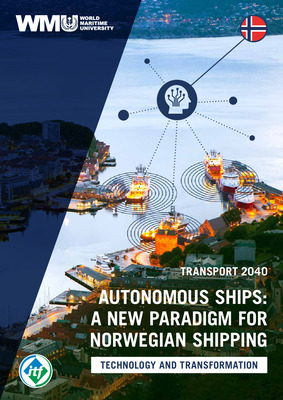
Transport 2040: Autonomous ships: a new paradigm for Norwegian shipping : technology and transformation
World Maritime University
The main section of this study summarizes overall trends and provides a global overview about developments in all four modes of transport. However, as highlighted in its main findings, technology and automation evolves in different ways in different contexts and environments. While in some countries, certain conditions may allow a new technology to find its way to the market, in other countries such a facilitating environment may not exist. Another factor identified is that the mechanisms behind the introduction of technology and automation in transport are complex. By highlighting general trends, as was mainly done in the Transport 2040: Automation, Technology, Employment – The Future of Work report, a number of interesting details are presented that may help the reader acquire a better understanding of the background and the dynamics in introducing technology and automation in transport – trends that are not necessarily discernible.
The project team also felt that dedicated Technology and Transformation Reports would provide the reader with an enhanced perspective. The concept behind the format of this report is one that has adopted a unified approach to identify the drivers behind the introduction of a certain application of technology or automation in a specific country, and to discuss this application in the context of Norway. These reports focus on six enabling factors introduced in the Transport 2040: Automation, Technology, Employment – The Future of Work report:
1. Technological feasibility – Is the technology ready for its large-scale application?
2. Economic benefits – Has a sound business model been drawn up?
3. Regulation and governance – Are the regulations ready? Are the authorities supportive?
4. Social acceptance – Does society accept the technology?
5. Labour market dynamics – Is labour expensive? Is there a labour shortage?
6. Knowledge and skills – Are users able to master the technology?
In summary, targeted reports, on the basis of the six factors highlighted above, can clearly enrich the discussion about the future of technology and automation in transport, and also provide a sound basis to compare the situation in different countries with the aim of predicting future trends and challenges as a result of a more automated global transport system.
Maritime transportation is fundamental to the world economy and importantly, it is a sector facing major changes due to new technologies and automation. The concept of an “autonomous ship” has recently attracted considerable attention from industry, media and labour organizations alike. The term “autonomous ship” potentially has far-reaching implications for daily life around the planet, for global finance and for the approximately 1.6 million seafarers working in shipping today.
The aim of this Technology and Transformation Report is to describe how autonomous shipping has been developing in a specific country. Norway has been identified as an apposite location to investigate the development of the autonomous ship, new technologies and their implications on seafaring labour and skills, because Norway is at the forefront of technological development, its maritime cluster is a global leader and the country has a long history of maritime seafaring.
This report therefore provides a snapshot of how autonomous shipping, in particular the Yara Birkeland – the first autonomous cargo ship in the world – is developing within the specific context of Norway. The methodology followed ensured that comparisons between this and other studies would be undertaken in different geographical locations with different local contexts. The Technology and Transformation Reports are intended to lead to a better understanding of the technology and of particular countryspecific industry factors that lead technology to develop along a particular path. With respect to the Norwegian case, conclusions are made on the future of its maritime workers based on the situational analysis undertaken in this report.
This report argues that Norwegian seafaring is at a crossroads in terms of the development of new job types and the required seafaring skills to execute them. While the autonomous ship has received considerable attention, what the report will refer to as “digitalization” more broadly is incrementally changing seafaring skills and the technical qualifications that will be required in the industry.
-

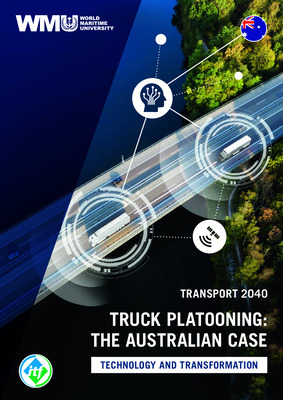
Transport 2040: Truck platooning: the Australian case : technology and transformation
World Maritime University
This study details a transport mode, a specific technology option in a specific country. In particular, this study covers truck platooning in road transport, with the focus on Australia. The Transport 2040: Automation, Technology, Employment – The Future of Work Report identified a series of key trends in the context of future transport technologies vis-à-vis transport workers’ employment situation and the wider ramifications on the market. Some of these trends are mode-specific, technology-specific, or specific to a certain geographic location and thus they do not develop in the same manner in all local contexts.
Vehicle automation in the road sector, with all its potential implementation scenarios, has been high on the political agenda for a number of years now, with its promise of road safety and transport efficiency improvements. In the absence of clarity as to when, in what shape and for which purpose high levels of automation will be implemented, truck platooning (also often referred to as truck automation) is often quoted by experts as one of two likely first-use cases to be realised, the other one being shared mobility public transport services in urban centres.
Australia is an interesting geographic region to consider truck platooning in more detail, both in terms of offering an enabling environment and in its possible integration into business models or problem solving through using this technology. The expert discourse on road vehicle automation is often very technology focused, starting with the solutions rather than analysing problems and responses first. The huge distances and dispersed communities in Australia have long posed specific transport problems, with unique solutions having been devised and implemented.
Key technologies in this context are, first, the emergence of “road trains”, i.e. very long combinations of up to three trailers being pulled by a truck. While their safety is generally guaranteed because of their use in remote areas – admittedly, accidents can happen in remote regions although their occurrence is far less likely than in populated regions – more recent technologies, such as the Intelligent Access Program (IAP), are using tracking technologies to limit usage to predefined safe corridors. Truck platooning, where multiple trucks are operated with minimum headways using “virtual tow-bars”, could be then seen as the logical next step. In addition, fully autonomous vehicles are already in operation in Australian mines.
-

Manning annual review and forecast 2018/19
Drewry
Is seafarer supply matching the demand from today’s global fleet? Drewry Maritime Research’s Manning Annual Review & Forecast 2018/19 report tackles this question and also sets out the facts concerning wage rates and terms of employment that dictate the cost of manning vessels.
- Global Seafarer - supply and demand - How has the seafarer supply changed in relation to the wider changes in the size of the world merchant fleet? Drewry provides forecasts up to 2023.
- Seafarer supply - Where is the global supply coming from and how has this changed? Projected additional officer supply 2019–2023.
- Seafarer demand - Fleet sector changes 2010-2018 for the 6 main vessel sectors of chemicals, containers, dry bulk, LNG, LPG and oil tankers. Projected fleet development and officer requirements 2019-2023.
- Benchmark crew wages and employment terms - Officer wage rates 2010-2018 covering chemical, container, dry bulk, LPG, LNG and oil tankers, ITF uniform "TCC" collective agreement 2014-2018.
- Crew budgets - Crewing budgets including wage, victualing, travel and miscellaneous costs, covering 33 different vessel types & sizes for the above cargo carrying sectors.
- Employment terms & 5-year cost forecasts - Trends in terms and conditions of service, including voyage length and leave, as well as manning cost forecasts covering the period 2019-2023.
- Country analysis - Seafarer numbers 2012-2018, 2018 wage rates breakdown across 10 grades, premium rates, reputation and market sentiment. Data covers Bulgaria, China, Croatia, India, Latvia, Philippines, Poland, Romania, Russia, Ukraine and UK.
-
A.P. MØLLER - MÆRSK A/S sustainability report, 2016
A.P. MØLLER - MÆRSK A/S
This report covers activities in the 2016 calendar year. Our approach to reporting is to focus on material issues and activities, in line with stakeholder concerns and relevance in terms of context, completeness and balance. We strive for optimal accuracy, timeliness, clarity and reliability in the way we communicate. This report also represents our statutory statement on social responsibility & underrepresented gender in accordance with sections §99a & b of the Danish Financial Statements Act. A.P. Moller - Maersk’s Sustainabiity accounting principles can be downloaded here: www.maersk.com/sustainabilityreport-2016-accounting-principles Previous years’ data and our UN Global Compact Communications on Progress table is also available online. Please visit http://www.maersk.com/en/themaersk-group/sustainability/reports
-

OECD reviews of innovation policy : Sweden 2016
OECD
This work is published under the responsibility of the Secretary-General of the OECD. The opinions expressed and arguments employed herein do not necessarily reflect the official views of OECD member countries. This document and any map included herein are without prejudice to the status of or sovereignty over any territory, to the delimitation of international frontiers and boundaries and to the name of any territory, city or area.
-

The ocean economy in 2030
OECD
This work is published under the responsibility of the Secretary-General of the OECD. The opinions expressed and arguments employed herein do not necessarily reflect the official views of OECD member countries. This document and any map included herein are without prejudice to the status of or sovereignty over any territory, to the delimitation of international frontiers and boundaries and to the name of any territory, city or area.
The statistical data for Israel are supplied by and under the responsibility of the relevant Israeli authorities. The use of such data by the OECD is without prejudice to the status of the Golan Heights, East Jerusalem and Israeli settlements in the West Bank under the terms of international law.
-
Review of maritime transport 2015 (UNCTAD/RMT/2015)
United Nations Conference on Trade and Development
-
Safety, security and sustainability in containerization
Fatoumatta Cassama
Safety, Security And Sustainability In Containerization