
Files
Download Full Text (4.0 MB)
Contributor(s)
Chong Ju Chae, Min Jung (Eds.)
Description
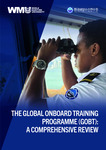
A stable supply of qualified seafarers is a critical component of the global maritime logistics industry, which relies heavily on maritime transportation. According to the 2021 BIMCO Manpower Report, an additional 89,510 officers will be needed by 2026. In 2021 alone, there was already a deficit of 26,240 STCW-certified officers, clearly indicating that demand continues to outpace supply. The report also noted a 45.8% increase in the number of female seafarers since 2015, although they still represent only a small share of the overall workforce. Maritime Education and Training (MET) institutions around the world continue to provide training to develop competent and qualified seafarers. However, some IMO member states face significant challenges in meeting the STCW Convention (1978, as amended) requirement of 12 months of approved seagoing service. A major obstacle arises when MET institutions do not have access to a training ship or do not operate their own merchant fleet, making it physically impossible to meet the mandated seagoing requirements. As previously mentioned, the global shortage of certified officers makes these limitations a direct barrier to producing qualified seafarers. In addition, the maritime sector still suffers from a shortage of female professionals, and new female entrants often face further constraints due to various structural and social factors. This report, jointly prepared by WMU and KIMFT, shares the achievements of the GOBT programme over the past five years and explores approaches for ensuring its long-term sustainability.
DOI
http://dx.doi.org/10.21677/260105
ISBN
978-91-990758-9-1 (online) 978-91-990757-0-9 (print)
Publication Date
2026
Publisher
World Maritime University
City
Malmö
Keywords
Onboard training, cadet, STCW 1978 Convention, ITCP, Gender Equality, Human Resources, Training Ship, Seafarers Supply
Disciplines
Business Administration, Management, and Operations | Education | Educational Assessment, Evaluation, and Research | Training and Development | Transportation
Included in
Business Administration, Management, and Operations Commons, Educational Assessment, Evaluation, and Research Commons, Training and Development Commons, Transportation Commons