
Files
Download Full Text (12.3 MB)
Description
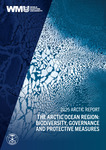
EXECUTIVE SUMMARY
• The Arctic Ocean region stands at the forefront of global environmental transformation, serving as a harbinger of climate change and a frontier for emergent geopolitical and economic interests.
• The Arctic region's economic potential, particularly in shipping and resource extraction, appears to offer shorter trade routes, reduced fuel consumption, and increased access to high-value resources. However, this analysis largely ignores the complex geo-physical, environmental and geographical limitations of the region.
• The fragility of Arctic Ocean ecosystems – characterized by slow ecological recovery, specialised biodiversity, and extreme environmental conditions – renders them especially vulnerable to anthropogenic disturbances.
• Indigenous communities who have sustainably inhabited and stewarded the Arctic for millennia, face existential threats to their food security, cultural continuity, and territorial sovereignty.
• The expansion of industrial-scale operations, often undertaken without sufficient Indigenous consultation or inclusion, risks marginalising these knowledge systems and exacerbating socio-environmental inequities.
• As the Arctic Ocean confronts unprecedented environmental, geopolitical, and economic pressures, the imperative to develop a cohesive and adaptive marine protection strategy has become increasingly urgent.
• The Particularly Sensitive Sea Area (PSSA) mechanism, while primarily concerned with mitigating threats from international maritime activities, possesses significant potential as a cornerstone of Arctic Ocean marine governance.
• Given the multiplicity of threats and actors involved, there is an urgent need for an integrated governance strategy drawing upon existing designations (i.e. Ecologically and Biologically Significant Areas), and consideration of new PSSAs and Marine Protected Areas (under the Biodiversity Beyond National Jurisdiction Agreement), to create a next-generation of Arctic Ocean-specific agreements following the Central Arctic Ocean Fisheries Agreement.
• The development and implementation of such tools, co-ordinated under a unified vision for Arctic Ocean resilience, offers a viable path forward. Through such an integrated regime – anchored in precautionary principles, ecological science, and cultural respect – the Arctic Ocean can remain not only a repository of biodiversity but also a space for peace, collaboration, and sustainable development.
DOI
http://dx.doi.org/10.21677/251111
ISBN
978-91-990758-4-6
Publication Date
2025
Publisher
World Maritime University
City
Malmö
Keywords
Arctic, Arctic Ocean, Central Arctic Ocean, North Pole, biodiversity, conservation, polar region, governance, International Maritime Organization, Particularly Sensitive Sea Area, Protective Measures, Associated Protective Measures, EBSA, MPA, marine protected areas, BBNJ, High Seas Treaty, UNCLOS, perennial sea-ice cover, Arctic Basin, seasonal ice zone, North Pole Marine Reserve, Arctic Council, International Seabed Authority, AMAP, CAOFA, PAME, TEK, VNIRO, MFRI, NAFO, NEAC, NEAFC, NIPAG
Disciplines
Biodiversity | Environmental Studies | Life Sciences | Oceanography | Political Science
Included in
Biodiversity Commons, Environmental Studies Commons, Oceanography Commons, Political Science Commons