
Files
Download Full Text (32.1 MB)
Description
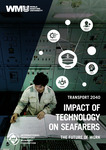
Through generous funding from the International Transport Workers’ Federation (ITF), the World Maritime University (WMU) has conducted Phase II of the Transport 2040 flagship project, building on the previous Phase I of the project. Phase II offers a further in-depth exploration of a number of maritime issues related to future ship technologies, including automation, and seeks to qualify the probable impact on seafarers.
Recent discussions in the maritime sector have given rise to expectations that automated ships could become operative in the near future, which has prompted the International Maritime Organization (IMO) to initiate a number of activities. Digital smart technologies represent a new wave of opportunities and hold great potential not only for higher productivity and economic growth but also for the improvement of the working conditions and safety of seafarers. As addressed by the Phase I report of the Transport 2040 project, the many challenges associated with this new wave of technology need to be discussed so seafarers can equally benefit from this development. Among the most critical challenges addressed in this report is the acquisition by seafarers of the skills and competencies required by the fast-evolving new technology as well as the protection of their wellbeing in light of the impact these new technologies will have on their profession.
DOI
http://dx.doi.org/10.21677/230613
ISBN
978-91-987474-8-5
Publication Date
2023
Publisher
World Maritime University
City
Malmö
Keywords
Transportation, workforce, seafarers, technology
Disciplines
Public Administration | Transportation | Work, Economy and Organizations
Included in
Public Administration Commons, Transportation Commons, Work, Economy and Organizations Commons